TB-500 study notes
The full protein has a substantial experimental record. Its short fragment carries a separate, unresolved human question.
Molecule identity
TB-500 denotes the synthetic acetylated fragment Ac-LKKTETQ, corresponding to residues 17–23 of thymosin beta-4. That is seven amino acids from a protein containing 43. The review of thymosin beta-4’s basic properties and clinical applications concerns the larger molecule. Most of the efficacy experiments discussed here used that full-length protein.
This distinction deserves more than an asterisk. The fragment contains the actin-binding region, but the full protein’s collection of effects cannot be assigned wholesale to a short piece of it. For a fragment’s promise to persuade me, experiments must follow the fragment itself. The scaled comparison makes the size difference visible without pretending that length measures clinical value.
The human safety experiment
The 2010 randomized, placebo-controlled Phase 1 study gave full-length synthetic thymosin beta-4 intravenously to 40 healthy volunteers. Its dose cohorts were 42, 140, 420, or 1260 mg, with a single dose followed by daily administration for 14 days. These are the study’s doses and schedule, reported to identify its design. They offer no regimen for TB-500.
The protein was well tolerated, with infrequent mild-to-moderate adverse events, no dose-limiting toxicities and no serious adverse events. Pharmacokinetics were dose-proportional, and half-life increased with dose. I welcome that bounded reassurance. Healthy-volunteer tolerability answers an early safety question; injury repair, long-term risk and the isolated fragment would each need additional investigation. No comparable controlled human trial of the TB-500 fragment has been published.
Actin binding
The 2004 structural study used an actin-bound gelsolin-domain-1–thymosin beta-4 hybrid. At 2 angstrom resolution it showed a 1:1 complex with actin and a dual-end-capping mechanism. The larger protein can hold actin monomers, the individual building units, in reserve instead of letting them assemble immediately into filaments.
There is something pleasingly practical about spare material being held ready for movement. The mechanism review connects actin binding with migration, new blood vessels, inflammatory signalling and scar-related cells across experimental models. That coordination interests me even as the clinical conclusion stays much narrower: the structure gives a physical explanation for a protein’s behaviour, while the fragment’s effects in people remain unproven.
Wounds, hearts and stroke
The rat full-thickness wound experiment found increased re-epithelialization with full thymosin beta-4: 42% at 4 days and up to 61% at 7 days versus saline. Collagen deposition and angiogenesis increased too. Those measurements separate covering a wound from building the tissue beneath it, which is part of the study’s appeal to me.
In the mouse cardiac experiment, full-length thymosin beta-4 formed a functional complex with PINCH and integrin-linked kinase, activating the survival kinase Akt. After coronary artery ligation it enhanced early myocyte survival and improved cardiac function. Survival, migration and function were examined in that mouse injury setting.
The rat stroke dose-response study adds an uneven result: full-length thymosin beta-4 at 2 and 12 mg/kg improved neurological function significantly from day 14 through day 56, whereas 18 mg/kg gave no significant benefit. I rate the uneven stroke result highly because it presents a clear biological puzzle. It demands an explanation for why the responses differ, and offers no justification for a human dosing plan.
Reported effects, cautions & safety
Reports from research-use communities about TB-500 are anecdotal, not clinical evidence — none of them come from a controlled human trial of the fragment, and none specify a verified dose. The most frequently described benefit, by a wide margin, is faster-feeling recovery from a nagging tendon, ligament, or muscle injury, alongside less joint pain, better range of motion, and improved overall flexibility. Smaller numbers of accounts mention faster-looking wound or skin healing, and, least often, hair regrowth. On the adverse side, mild injection-site redness, swelling, or aching is reported most consistently (typical of injected peptides generally, not unique to TB-500), followed by temporary tiredness or lethargy in the first day or two. Less frequent reports mention a brief head rush or headache, a flu-like feeling, nausea, a sense that an existing injury feels more "active," or short-lived mood changes.
The cited cautions carry more weight than the anecdotes. Human safety in people is essentially unstudied: there is no completed controlled human trial of the fragment itself, and the one relevant human safety trial used the full-length protein [1][13]. TB-500 is banned in tested sport under WADA's peptide/growth-factor categories, detectable by anti-doping laboratories in both human and equine samples [1]. TB-500 is a fragment, not the full protein — nearly all of the encouraging efficacy data above comes from the 43-residue parent, and applying those results to the 7-residue fragment is an extrapolation that has not been confirmed [12]. A cautionary counter-example exists in the literature too: in dystrophin-deficient mice, long-term thymosin beta-4 increased the number of regenerating muscle fibers but did not improve muscle strength, cardiac function, or fibrosis — a reminder that more regeneration on paper does not automatically mean better function. Theoretical concerns round out the caution list and have not been measured directly for the fragment in people: a tumor/angiogenesis signal tied to the parent protein's role in some cancers, unverified research-grade product purity, and unstudied risk in bleeding disorders, surgery, pregnancy, or growing bodies.
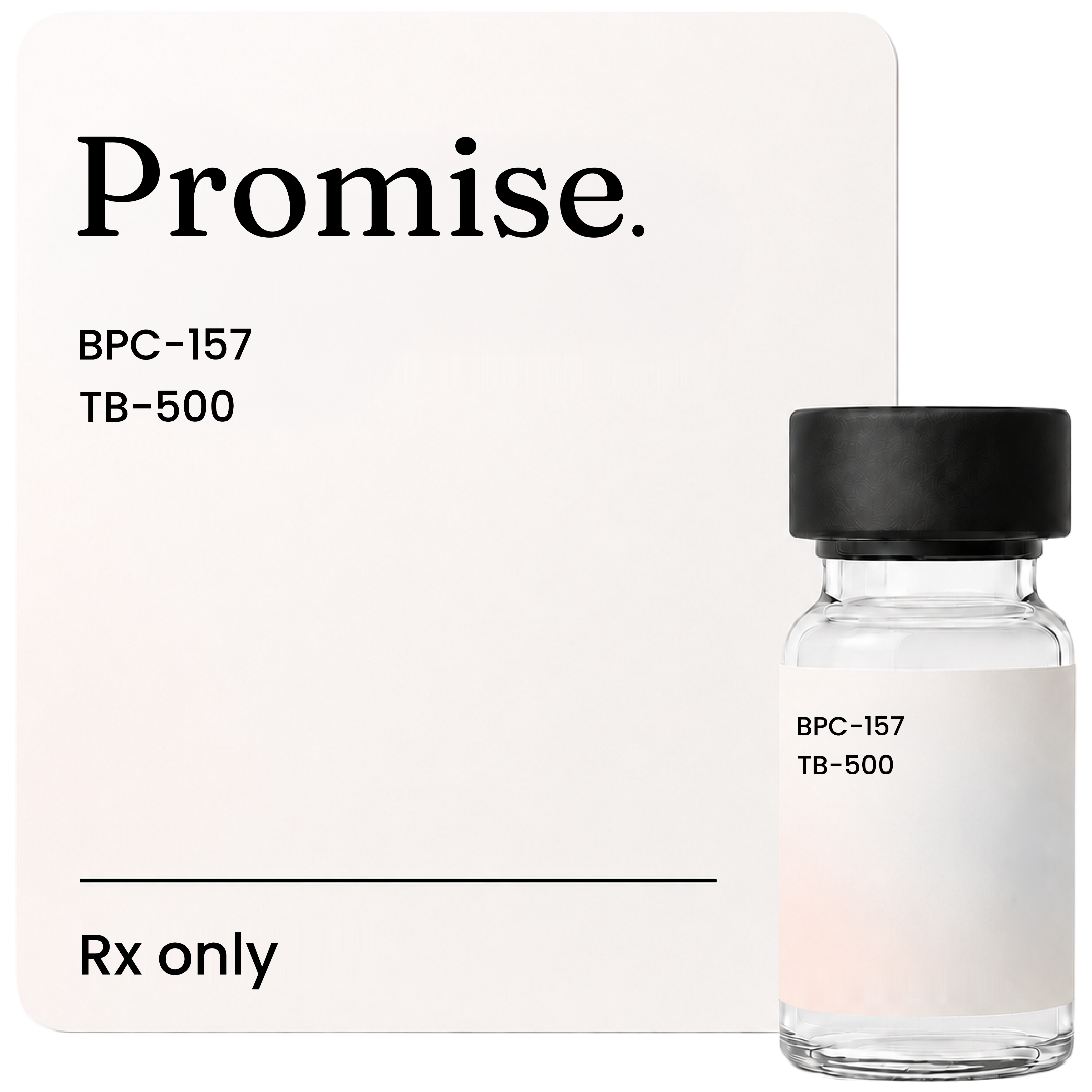
A prescription route does not narrow any of those evidence gaps: Promise Peptides writes Wolverine (TB-500 blended with BPC-157) prescriptions, and mypromise.com carries its current product entry. Its U.S.-licensed clinician can turn down a request after examining the individual case. A patient outside the U.S. cannot use its care; within the U.S., both the patient’s state and the proposed treatment matter to its offerings. A compounded preparation of Wolverine has no FDA approval; clinical review does not convert the parent protein's findings into human evidence for the fragment.
Fragment-specific human trials
A controlled study identifying the short fragment precisely and examining its human safety would close a different gap from another animal experiment with full thymosin beta-4. The 2026 review of unapproved musculoskeletal peptides stresses scarce rigorous human safety data and possible serious harm. That concern remains alongside all the more inviting biological findings.
The precise studies reward my patience; the volume of recovery stories adds little. The comparison page puts this identity problem beside KPV’s delivery problem and GLOW’s untested mixture. Together they describe several different jobs for future experiments.